When you’re planning a new floor, one of the biggest choices you’ll face is whether to go with traditional screed or invest in self-levelling screed. This decision can have a major impact on your project’s cost, timeline, and final quality. At Base Concrete, we help customers across Hemel Hempstead, Watford, and North London make this choice every day.
So what’s the real difference, and is self-levelling screed worth the extra money? Let’s break it down in simple terms.
What Is Self-Levelling Screed?
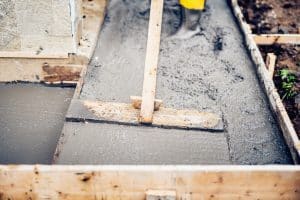
Self-levelling screed is a special floor covering that does exactly what its name suggests – it levels itself. Unlike traditional sand and cement screed that needs to be spread and smoothed by hand with tools, self-levelling screed flows like thick liquid when poured. It automatically spreads out to create a perfectly flat, lump free surface.
These modern levelling compounds may initially cost more, but they save you money on labour because they require less time and effort to install. The material contains special additives that help it flow smoothly and set quickly, creating a professional finish with minimal manual work.
The Cost Comparison
Let’s talk numbers. The average floor screed cost per m² is £19 for traditional screed, whilst liquid screed cost is £21.50 per m². This means you’re looking at roughly £2.50 more per square metre for self-levelling screed.
For a typical house extension of 50 square metres, that’s an extra £125. For larger commercial projects, the difference becomes more significant. However, for a 100 m², it would be approximately £16/m² for self-levelling screed when done at scale, showing how costs can come down with larger areas.
The initial price difference might seem off-putting, but there’s more to consider than just material costs.
Time Is Money: Installation Speed
Here’s where self-levelling screed really shines. Screeding rates of up to 1000 sq.metres per day are not uncommon with self-levelling screed, compared to traditional screed which is typically of around 125 – 150 sq.m per day.
This massive difference in speed means:
- Less time paying for labour
- Faster project completion
- Earlier return to normal use of the space
- Reduced disruption to your daily routine
For our customers in busy areas like Watford and Hemel Hempstead, getting back to normal quickly is often worth the extra cost alone.
Quality and Finish
Self-levelling screed provides a smoother, more consistent finish than traditional methods. These advanced levelling compounds create surfaces that are completely lump free, unlike hand-mixed screed which can have inconsistencies. Because it flows naturally, there are no trowel marks, uneven spots, or human error affecting the final surface.
This superior finish is particularly important if you’re planning to install:
- Luxury vinyl tiles
- Engineered wood flooring
- High-end ceramics
- Any flooring that shows imperfections easily
The Practical Benefits
Faster Drying Times These rapid setting levelling compounds allow foot traffic within 3-24 hours after application. Traditional screed can take days or even weeks to fully cure, but rapid setting formulations get you back to using your space much sooner.
Reduced Labour Costs Since the screed levels itself, you need fewer skilled workers for a shorter time. This often offsets the higher material cost.
Better for Underfloor Heating Self-levelling screed works brilliantly with underfloor heating systems. The liquid flows completely around heating pipes without leaving air gaps. This gives you better heat distribution and makes your underfloor heating more efficient. According to the International Concrete Repair Institute, proper substrate preparation is crucial for optimal performance, and self-levelling compounds provide the ideal base for radiant heating installations. Traditional screed can be difficult to get perfectly around heating tubes.
Ideal for Awkward Spaces Self-levelling screed can reach into corners and around obstacles that would be difficult to access with traditional methods.
When Self-Levelling Screed Might Not Be Right
It’s only fair to mention when self-levelling screed isn’t the best choice:
Outdoor Areas Liquid screeds are not suitable to areas exposed to water in many cases, making them inappropriate for patios or driveways.
Sloped Areas Being liquid flowing screeds, self levelling screeds are unsuitable for areas where falls are required in order to form ramps, or for drainage in wet areas such as shower rooms.
Very Thick Applications Self levelling screeds are generally unsuitable for use in unbonded or floating applications and work best in thinner layers.
Budget-Tight Projects If you’re working with very tight budgets and have plenty of time, traditional screed remains the cheapest option.
Our Experience at Base Concrete
We’ve been working with both traditional and self-levelling screeds since 2002. What we’ve noticed is that customers who choose self-levelling screed are almost always happy with their decision. The speed, quality, and reduced hassle make it worthwhile for most projects.
Our concrete pumping services can deliver self-levelling screed efficiently to any site, whether it’s a tight residential space or a large commercial project. We also offer floor screed services that cover everything from small domestic jobs to major installations. We can help you decide which option makes most sense for your specific situation.
Making the Decision: A Simple Framework
Ask yourself these questions:
Do you need the job done quickly? If yes, self-levelling screed is almost certainly worth it.
Is the floor going to have expensive finishes? High-end flooring deserves a high-end base. The smoother finish justifies the extra cost.
Do you have underfloor heating? Self-levelling screed is nearly always better for underfloor heating installations because it flows perfectly around the pipes.
Is it a large area? The bigger the job, the more the time savings matter.
Are you doing this yourself? Self-levelling screed is much easier for DIY projects, though we’d always recommend professional installation for best results.
The Bottom Line
While self-levelling compounds may initially cost more, they may save you money on labour because they require less time and effort to install. When you factor in the time savings, superior finish, and reduced disruption, self-levelling screed often provides excellent value for money.
For most modern construction and renovation projects, we believe the extra investment in self-levelling screed pays for itself through faster completion, better results, and reduced stress. The small additional cost per square metre is usually worth it for the benefits you get.
If you’re still unsure, give us a call. We’re happy to discuss your specific project and help you make the right choice. After all, we want you to be completely satisfied with your floor – it’s what you’ll be walking on for years to come.
Frequently Asked Questions
How long does self-levelling screed take to dry?
Most rapid setting levelling compounds allow foot traffic within 3-24 hours and are ready for floor coverings within 16-48 hours, depending on the product and conditions. This is much faster than traditional screed, which can take several days to weeks.
Can I use self-levelling screed over existing tiles?
Yes, self-levelling screed can often be applied over existing tiles, but the surface must be properly cleaned and prepared first. Some products may require a primer to ensure good adhesion. It’s best to check with professionals about your specific situation.
What’s the maximum thickness for self-levelling screed?
Most self-levelling screeds work best between 1-10mm thickness, though some products can go up to 30mm in a single application. For thicker applications, traditional screed might be more suitable and cost-effective.
Will self-levelling screed work with my underfloor heating system?
Yes, these levelling compounds are perfect for underfloor heating. They flow around the heating pipes completely, with no air gaps that could affect heat transfer. This makes your underfloor heating system work better and heat up faster than with traditional screed.