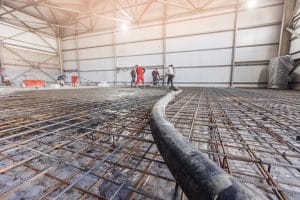
Concrete. It’s quite literally the foundation of modern buildings, yet getting it right can be trickier than you might think. Here at Base Concrete—your local ready mix concrete supplier in Hemel Hempstead since 2002—we’ve seen plenty of concrete mishaps over the years. Let’s look at the five most common concrete mistakes and how you can avoid them on your next project.
1. Ordering the Wrong Mix
The most common error we see is people choosing the wrong concrete mix for their project. Different projects need different concrete strengths, measured in newtons.
As our domestic concrete page explains, “The C mixes are letting you know the newton strength of the mix so the higher the number the more cement content.”
| Project Type | Recommended Mix | Benefits |
|---|---|---|
| Shed base or floor | Gen3 (C20) | Good general strength |
| Driveway or path | Pav1 | Enhanced crack resistance |
| Double-storey extension | Gen3 (C20) or higher | Superior structural support |
Using the wrong mix accounts for about 40% of all concrete-related building failures. That’s a statistic worth avoiding!
2. Poor Concrete Mixing Ratios
Too much water weakens concrete. It might make the mixture easier to work with, but excess water significantly reduces strength and crack resistance in your finished concrete slab.
When using ready mix concrete, our professionals ensure the perfect water balance. But if you’re mixing on site, resist adding extra water just to make it flow better.
3. Inadequate Site Preparation
Even the best ready mix in the world won’t perform properly if poured onto a poorly prepared surface.
Before pouring, make sure you’ve:
- Removed all plants and topsoil
- Compacted the ground thoroughly
- Set up level formwork
A study by engineers at the University of Cambridge found that uneven ground causes nearly 25% of concrete slab failures in homes. A proper sub-base isn’t just good practice—it’s essential for lasting results.
4. Ignoring Weather Conditions
British weather can be unpredictable! Pouring concrete in extreme conditions leads to quality issues that reduce crack resistance.
At Base Concrete, we can advise on the best timing for your ready mix delivery. Our commercial concrete options include special additives for various weather conditions to ensure your project succeeds regardless of what the sky is doing.
5. Inadequate Curing
Perhaps the most overlooked stage in concrete mixing is proper curing. Many think the job’s done once the concrete’s poured, but curing is when concrete develops its strength.
For best results, keep concrete moist for at least 7 days after pouring and protect it from direct sunlight, wind, and extreme temperatures. These simple steps can increase your concrete’s final strength by up to 50% and significantly improve crack resistance.
The Perfect Pour
At Base Concrete, we pride ourselves on delivering quality ready mix concrete throughout Hemel Hempstead and surrounding areas. Our friendly team can help you avoid these common mistakes and achieve the perfect result.
Remember, when it comes to concrete, getting it right isn’t just about saving money—it’s about ensuring safety, durability, and performance for years to come.
Frequently Asked Questions
How do I calculate how much concrete I need?
Use a concrete calculator or measure the length, width, and depth of your area in metres, then multiply these figures together. For example, a concrete slab that’s 3m long, 2m wide, and 0.15m deep requires 0.9 cubic metres (3 × 2 × 0.15 = 0.9). Add 10% for spillage.
Can I pour concrete directly onto soil?
Not recommended. Remove topsoil, add a sub-base of compacted hardcore (typically 100mm thick), and consider adding a damp-proof membrane for a stable foundation that extends your concrete slab’s life.
How long does concrete take to set?
Concrete typically becomes walkable within 24-48 hours but continues gaining strength for weeks. It reaches approximately 70% of its final strength after 7 days and about 90% after 28 days.
What’s the difference between a drum mixer and a volumetric lorry?
A drum mixer delivers pre-mixed concrete that must be used promptly. A volumetric lorry “can mix as you go so you can take what you need as well as only pay for what is used”—ideal when the exact quantity is uncertain.