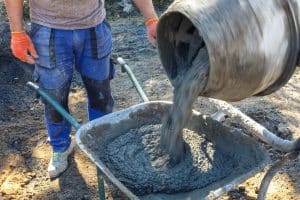
A volumetric mixer is a clever bit of kit. It carries the sand, stone, cement and water separately, then mixes fresh concrete right there on your site. You only pay for what you use, and you can even take two different mixes from the same lorry. But there is one thing that catches people out when they book their first on-site mix, and that is space.
The lorry is big, and it needs room to park, work and leave again safely. If the space is not ready, the pour can be delayed or, in the worst case, the lorry cannot get to you at all. The good news is that a little planning sorts this out. This guide walks you through how much room a volumetric concrete lorry needs and the simple steps to get your site ready for delivery day.
Why space matters with a volumetric mixer
A volumetric mixer is basically a small concrete plant on wheels. That means it is larger and heavier than a normal van or tipper. It carries up to 10 cubic metres of material, and all of that weight sits on one vehicle.
Because the mixing happens on site, the lorry has to stay put while the pour is going on. It is not a quick drop and go. The driver needs a clear, firm and level spot to set up, run the mixer and reach the place where the concrete is going. Sorting the space out before the lorry arrives is the single best way to make sure the day runs smoothly.
How big is the lorry?
Every job is a little different, so it always helps to confirm the exact vehicle with our team when you book. As a general guide, here are the rough sizes to plan around.
| What to check | Rough size to plan for | Why it matters |
|---|---|---|
| Lorry length | Around 8 to 9 metres | The lorry needs a straight run to park and space to pull away |
| Lorry width | Around 2.5 metres | Gateways, driveways and gaps between walls must be wider than this |
| Height clearance | Around 3.5 to 4 metres | Low branches, cables, signs and archways can block the way |
| Weight | Up to roughly 32 tonnes when full | Soft ground, drain covers and weak surfaces may not take the load |
| Working space | A clear area beside and behind the lorry | The driver needs room to open chutes and run the mix out |
If your access is tight, do not worry. We also run smaller mini mixers that are about the same size as a 6-yard skip lorry and carry up to 4.5 cubic metres. These are handy for narrow lanes and hard-to-reach spots.
Ground access: getting the lorry in and parked
Start by walking the route the lorry will take, from the road all the way to where it will stand. Look for anything that could get in the way or slow it down.
Check the width of every gateway, gap and turn. Remember the lorry is around 2.5 metres wide, so a gap that looks fine for a car may be too tight. Move parked cars, bins, skips and any loose materials well before delivery day so the driver has a clear run.
Think about the ground itself. A full volumetric mixer is very heavy, so the surface needs to be firm and level. Soft grass, wet mud, gravel or a newly laid drive can sink or get damaged under that weight. If you are worried about a soft patch, mention it when you book so we can plan the safest place to park. Also point out any manhole covers, drain lids or septic tanks, as these can crack if a heavy wheel sits on top of them.
Finally, leave enough clear space around the parking spot. The driver needs room on the side to open the chutes and guide the concrete out, plus space to turn or reverse safely when the job is done.
Overhead access: look up before you book
It is easy to focus on the ground and forget to look up. Overhead obstacles are one of the most common reasons a delivery gets held up.
The lorry stands around 3.5 to 4 metres tall, and the mixing gear may need a little more clearance on top of that. Check the whole route and the parking spot for low tree branches, telephone wires, washing lines, low bridges, carport roofs and archways. Cutting back a few branches in advance can save a lot of hassle on the day.
Take extra care with overhead power lines. These are dangerous and must be given a wide berth by tall vehicles and any lifting gear. If there are power cables near your site, plan the parking spot well away from them. You can read the official safety advice on the Health and Safety Executive guidance for avoiding danger from overhead power lines, which explains why keeping a safe distance matters.
What if the lorry cannot reach the pour?
Sometimes the concrete needs to go somewhere the lorry simply cannot park close to, such as a back garden, a basement or the far side of a building. This does not mean the job is off.
The mixer can often stay on the road or drive while the concrete is moved to where it is needed. For longer distances or awkward spots, we offer concrete pumping. A line pump runs pipes along the ground for up to 100 metres, and a boom pump uses a crane arm to lift and place concrete over walls and buildings. If you think access might be a problem, tell us when you book, and we will suggest the best option.
Your delivery day checklist
A few simple jobs the day before will help everything run on time:
- Clear the route and the parking spot of cars, bins, skips and loose materials.
- Check gateways and gaps are wide enough for a lorry about 2.5 metres wide.
- Make sure the ground is firm and level, and cover or point out any weak drain covers.
- Cut back low branches and note any wires or low structures overhead.
- Keep power lines well clear of the parking area.
- Have someone on site who can show the driver where to go and where the concrete needs to end up.
- Make sure barrows, boards and helpers are ready so the fresh mix can be moved quickly.
Ready to book your on-site mix?
Getting the space right is the key to a smooth pour, and most access problems are easy to fix once you know what to look for. Measure your gaps, check the ground, look up for anything overhead, and let us know about anything tricky when you book.
If you are still unsure about access or want to double-check the details, take a look at our frequently asked questions or give our friendly team a call. We have been supplying concrete across North London and Hertfordshire since 2002, and we are happy to help you plan the best way to get your mix exactly where you need it.