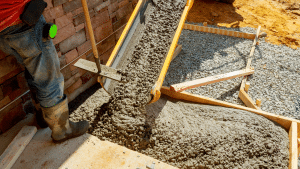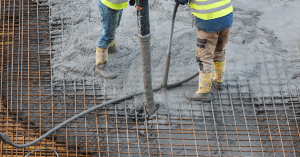
You might not know that concrete mini mixers are specifically designed to tackle the challenges of restricted construction areas. Thanks to their compact frames and reduced turning radius, these mixers efficiently navigate narrow alleyways and tight spaces. Their substantial load capacity guarantees they maintain project efficiency despite their size. Curious about how mini mixers compare to traditional delivery methods regarding performance and practicality? There’s more to explore in the world of compact concrete solutions.
Key Takeaways
– Compact designs enable mini mixers to navigate narrow alleyways and tight city streets.
– Reduced turning radius allows mini mixers to handle sharp turns in restricted areas.
– Lightweight frames and robust wheels facilitate easy mobility in confined spaces.
– Mini mixers’ substantial load capacities maintain efficiency despite their small size.
– Efficient engines ensure reduced fuel consumption while accessing restricted construction zones.
Understanding the Design and Functionality of Concrete Mini Mixers
When delving into the design and functionality of concrete mini mixers, it’s vital to understand their core components and operation.
You’ll find these mixers are equipped with compact drums, typically 2 to 5 cubic feet, maximising them for small-scale projects. Design features like hydraulic systems guarantee precise mixing and efficient discharge. The 360-degree rotating drum enhances mixing uniformity, a significant factor for quality concrete.
Functionality advantages include easy mobility due to lightweight frames and robust wheels, allowing you to maneuver them with minimal effort. The mixers’ electric or gas-powered engines provide reliable performance, supporting continuous operation.
Navigating Tight Spaces: How Mini Mixers Excel in Urban Environments
Equipped with compact and efficient designs, concrete mini mixers are ideally suited for maneuvering urban environments where space is at a premium.
You face space constraints that demand precision, and these mixers are engineered to address such challenges. Their reduced turning radius and optimised dimensions make them the perfect solution for traversing tight city streets and construction zones.
Here’s how they excel in urban logistics:
- Size Efficiency: Mini mixers fit through narrow alleyways and confined areas, maximising site accessibility.
- Manoeuvrability: With improved steering capabilities, they handle sharp turns and tight corners effortlessly.
- Load Capacity: Despite their small size, they maintain substantial load capacities, ensuring project efficiency.
- Fuel Economy: Their efficient engines reduce fuel consumption, optimising operational costs in urban logistics.
These factors make mini mixers indispensable in space-constrained urban projects.
Overcoming Indoor Challenges With Compact Concrete Solutions
Although working indoors presents unique challenges for concrete construction, compact concrete solutions are engineered to meet these demands head-on. You need equipment that’s agile yet robust, able to navigate constrained spaces and deliver precise mixes.
Compact solutions like mini mixers are specifically designed for indoor applications, allowing you to achieve ideal results with minimal space. These machines typically feature a reduced footprint, making them ideal for maneuvering through narrow corridors or tight areas without sacrificing performance.
Consider a scenario where a 1.5-meter-wide passage restricts your movement. A mini mixer, with its compact design, can efficiently operate within such confines, ensuring accurate mix ratios and consistent quality.
Efficiency and Quality: Evaluating Performance in Restricted Areas
To truly assess the efficiency and quality of concrete mini mixers in restricted areas, you need to contemplate several critical factors that directly impact their performance. Evaluating these involves precise performance metrics and a problem-solving approach.
Consider the following factors:
- Manoeuvrability: Calculate the turning radius needed to access tight spaces without compromising the mixer’s stability.
- Mixing Capacity: Assess the volume output per hour, guaranteeing it meets project demands within restricted access confines.
- Energy Efficiency: Determine fuel or electrical consumption rates to maintain cost-effectiveness in limited environments.
- Durability: Examine wear and tear resistance considering frequent starts and stops in restricted zones.
Quantifying these metrics will guarantee you’re maximising both efficiency and quality under challenging conditions.
Comparing Mini Mixers to Traditional Concrete Delivery Methods
When evaluating the performance metrics of concrete mini mixers in constrained spaces, it becomes evident that these machines offer distinct advantages over traditional concrete delivery methods.
Mini mixer advantages include their compact size, enabling access to tight areas that larger vehicles can’t reach. This capability reduces the need for additional equipment like pumps, cutting costs and time.
Traditional delivery limitations often involve maneuverability issues and potential delivery delays due to space constraints. With mini mixers, you can achieve precise volumetric calculations, ensuring ideal mix quality and reducing waste.
Their efficiency in restricted environments not only enhances productivity but also minimises logistical challenges. By selecting mini mixers, you’re prioritising adaptability and cost-effectiveness in site-specific conditions, ultimately streamlining your construction processes.
Frequently Asked Questions
Are There Any Specific Licenses Required to Operate a Mini Mixer?
Charting licensing requirements is like deciphering a complex map. You must adhere to operational regulations, ensuring you have the correct operator’s license. It’s vital for safety and compliance when maneuvering a mini mixer on-site.
Can Mini Mixers Be Used for Residential DIY Projects?
You can definitely use mini mixers for residential DIY projects. They offer benefits like precise mixing ratios and efficient space use. Calculate your concrete needs accurately, ensuring the mini mixer’s capacity aligns with your project’s volume requirements for ideal results.
How Long Is the Typical Lifespan of a Concrete Mini Mixer?
Think of a mini mixer as a marathon runner: with proper maintenance, it can last 10-15 years. Durability factors like material quality and operational efficiency impact lifespan, so guarantee regular check-ups and ideal usage for peak performance.
What Are the Maintenance Requirements for Concrete Mini Mixers?
You should follow a maintenance schedule for mini mixer upkeep. Check oil and hydraulic levels weekly, inspect blades, clean the drum after each use, and lubricate moving parts. Regularly tighten bolts to prevent breakdowns and guarantee efficient operation.
Conclusion
You’ve just revealed the ultimate construction secret weapon! Concrete mini mixers are like the Swiss Army knives of urban construction, maneuvering impossibly tight spaces with the grace of a ballet dancer. They effortlessly conquer narrow alleyways and sharp turns, turning logistical nightmares into mere child’s play. Imagine squeezing a giant into a phone booth—yet still delivering superior efficiency and quality. These compact powerhouses redefine what’s possible, leaving traditional methods in the dust. Embrace the future of construction with confidence and precision!