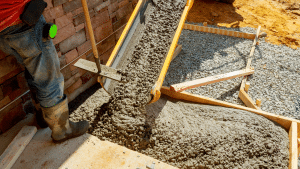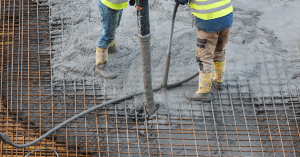
 Creating a beautiful garden that lasts for years comes down to one thing: using the right concrete mix. Whether you are planning a simple garden path, a spacious patio for outdoor dining, or a sturdy driveway, the concrete you choose makes the difference between a surface that lasts decades and one that cracks within a few years.
At Base Concrete, we have been helping homeowners and trade customers choose the perfect concrete mix for their garden projects since 2002. This guide covers everything you need to know about picking the right mix, understanding concrete grades, and getting your concrete delivered, even to tricky spots.
Understanding Concrete Grades for Garden Projects
Before choosing a concrete mix, it helps to understand how concrete strength is measured. In the UK, concrete grades use a simple system. The letter “C” is followed by a number that tells you how much pressure the concrete can handle after 28 days of curing. For example, C20 can withstand 20 Newtons per square millimetre, whilst C25 can handle 25 Newtons per square millimetre.
The higher the number, the stronger the concrete. But stronger does not always mean better for your project. Using a grade that is too strong for a garden path wastes money, whilst using one that is too weak for a driveway leads to cracking and expensive repairs.
Here is a quick guide to matching the right grade to your garden project:
C20 (Gen3) – General Purpose Mix: This is the go-to choice for most garden landscaping work. Our C20 General Purpose Mix provides good workability and enough strength for everyday garden features like shed bases, footpaths, and small patios. The typical mixing ratio is 1 part cement, 2 parts sand, and 4 parts aggregate, creating the right balance of strength and workability for general garden use.
C25 – Multi-Purpose Mix: A step up from C20, this grade works well as a foundation mix and is often chosen for garage bases and areas that need a bit more strength than standard garden paths.
PAV1 – The Driveway and Patio Specialist: PAV1 concrete is specifically designed for external use on driveways, paths, and patios. What sets it apart from standard mixes is the inclusion of an air-entraining agent (AEA), which provides frost protection. This makes PAV1 the right choice for any outdoor surface exposed to British weather all year round. PAV1 offers a compressive strength of around 25 N/mm², strong enough to handle cars, delivery vans, and regular foot traffic without cracking.
C35 – Heavy-Duty Applications: For areas that need to handle heavier loads, our C35 concrete mix provides greater durability. It can withstand heavy vehicles and is a good choice for farmyards and stables, as it resists the effects of animal urine that can weaken some concrete types over time.
Choosing the Right Concrete for Garden Paths
For most garden paths, C20 concrete is your best choice. Here is why it works so well:
It has the right strength for foot traffic. C20 is strong enough to handle garden wheelbarrows, lawnmowers, and regular walking without cracking. It also stands up well against constant exposure to rain, frost, and temperature changes that are part of everyday British weather.
C20 has good workability, meaning it is easier to pour, level, and finish to create an attractive surface. For garden paths that only carry foot traffic, you need a finished depth of at least 50mm, though 75mm gives a more robust result.
For paths that will see heavier use, such as regular wheelbarrow traffic or light garden vehicles, stepping up to C25 or even C35 gives you greater durability.
When it comes to getting a nice finish, garden paths do not have to look grey and boring. Exposed aggregate finishes reveal the natural beauty of the stones in the mix, creating an attractive and slip-resistant surface. Stamped patterns can mimic natural materials like slate, stone, or brick. Coloured pigments can be added to the concrete so it blends in with your garden design.
PAV1 Concrete: The Best Choice for Driveways and Outdoor Paving
If your garden landscaping project includes a new driveway, patio, or any external paved area, PAV1 is the concrete grade you should be looking at. It is specifically engineered for outdoor paving where frost protection matters.
Why PAV1 Stands Out
Freeze-Thaw Resistance: The biggest advantage of PAV1 is its built-in protection against frost damage. British winters bring repeated cycles of freezing and thawing. When water inside concrete freezes, it expands and can cause cracking. PAV1 includes air-entraining agents that create tiny air pockets within the concrete. These pockets give the water space to expand when it freezes, preventing the kind of internal damage that destroys ordinary concrete surfaces over time. As the Concrete Society explains in their guidance on air-entraining admixtures, the main reason for using entrained air is to improve freeze-thaw and scaling resistance and prolong the service life of outdoor concrete.
Load-Bearing Strength: PAV1 has a compressive strength of approximately 25 N/mm². This means it can comfortably handle the weight of cars, SUVs, delivery vans, and even small commercial vehicles. The mix distributes weight evenly across the surface, reducing the risk of localised cracking or sinking.
Low Maintenance: Because PAV1 is designed specifically for outdoor use, it needs very little upkeep. Its dense structure resists moisture getting in, which means less risk of frost damage, fewer cracks, and a surface that stays smooth and level for years. A simple clean with a pressure washer once or twice a year and sealing every 3 to 5 years is all that is typically needed.
Weather Resistance: Beyond frost protection, PAV1 also resists damage from de-icing salts, rain, and UV exposure. This makes it a reliable, long-lasting choice for any outdoor surface in the UK climate.
PAV1 Applications in Your Garden
PAV1 works brilliantly for driveways and parking areas where vehicles will be parked or driven regularly. It is also ideal for patios and outdoor entertaining areas that need to withstand furniture, foot traffic, and weather. Garden paths that double as access routes for vehicles or heavy equipment also benefit from PAV1. It is equally suited to external flooring for garages, workshops, or outbuildings.
What About Heavier-Duty Needs?
For commercial yards, agricultural buildings, or areas with very heavy vehicle traffic, C35 concrete provides even greater strength and durability. If you are unsure which grade is right for your project, our team can advise you based on how the area will be used.
Creative Uses of Concrete in Garden Landscaping
Modern concrete is far more versatile than the grey, boring material you might picture. Today’s concrete can look like natural stone, wood, or completely unique textures and colours. Here are some popular ways to use concrete in your garden design:
Raised Beds: Concrete raised beds last for decades and can be built to any height or shape. They are particularly good for vegetable gardens because they warm up quickly in spring and hold their shape as soil settles. You can build in seating edges or create different levels for visual interest.
Patios and Seating Areas: The beauty of concrete for patios is size flexibility. Whether you want a small seating nook or a large entertaining space, concrete can be poured to fit exactly. No cutting, no waste, and no awkward joints to deal with. Our domestic concrete service covers everything from simple patio slabs to more complex outdoor living spaces.
Steps and Terracing: If your garden has slopes, concrete steps look fantastic and work brilliantly. They can follow natural contours or create bold geometric lines. Built-in planters or lighting can be added during construction. Unlike separate stone blocks, concrete steps are built as one piece, so they do not shift or become uneven over time.
Decorative Finishes: Integral colours can be mixed right into the concrete, so they will not fade or wear off. Popular garden colours include warm browns, soft greens, and natural stone shades. Stamped concrete can mimic slate, stone, brick, or wood. Exposed aggregate shows off decorative stones mixed into the surface, creating a non-slip texture that looks great on paths and patios.
Permeable Surfaces: Sustainable garden landscaping is increasingly important. Permeable concrete allows water to pass through rather than run off, supporting natural drainage systems. The government’s guide to permeable surfacing of front gardens explains why permeable surfaces help reduce flood risk and are becoming essential in modern garden design. Under current planning rules, you need permission to pave over more than 5 square metres of your front garden with non-permeable materials, but permeable surfaces are generally exempt. Using local gravel or crushed stone in permeable concrete can also reduce the environmental impact of your project.
Getting the Right Amount of Concrete
Working out how much concrete you need is simpler than you might think. Measure the length, width, and depth of your area and multiply them together to get the volume in cubic metres.
For example, a patio measuring 4 metres long by 3 metres wide with a depth of 100mm (0.1 metres) needs 1.2 cubic metres of concrete. For a garden path that is 10 metres long, 1 metre wide, and 75mm deep, you would need 0.75 cubic metres.
We always recommend adding about 10% extra to account for any variations in ground level or slight wastage during pouring. Use our online concrete calculator for a quick estimate, or call us and we will help you work it out over the phone.
Concrete Delivery Options for Garden Projects
Getting concrete to your garden can be the trickiest part of the whole project, especially if you have limited access. We have several options to make sure your concrete arrives where you need it, no matter the circumstances.
Standard Drum Mixer Lorries
Our 8-cubic-metre lorries are ideal when you have good access and need larger amounts of ready mix concrete. They deliver pre-mixed concrete from our plant, ready to pour straight away.
Mini Mix Lorries
Not every garden has wide, open access. That is where our Mini Mix lorries come in. These smaller lorries are the same width as a standard 6-yard skip lorry, so if you have had a skip delivered and the lorry was fine, our Mini Mix will be too. They are much shorter in length, giving them much better manoeuvrability on tight streets and narrow driveways. Mini Mix lorries carry up to 4.5 cubic metres and are perfect for smaller garden projects. We deliver amounts from as little as 0.5 cubic metres upwards.
Volumetric Mix-On-Site Lorries
Our volumetric lorries are a particularly smart choice for garden projects. They carry all the raw materials separately and mix your concrete fresh on site. The big advantages are that you only pay for what you actually use, as there is no waste from over-ordering. The concrete is always completely fresh, giving you maximum working time of 90 to 120 minutes. The operator can also adjust the mix on the spot if your needs change partway through the job.
Volumetric lorries can carry up to 10 cubic metres and can produce different concrete grades during the same visit. So if you need C20 for a shed base and PAV1 for a patio, the same lorry can deliver both without any additional cost for separate loads.
Concrete Pumping for Difficult Access
When your garden is at the back of the house, down an alleyway, or simply impossible to reach with a lorry, our concrete pumps solve the problem.
Line Pumps: These are mounted on 7.5-tonne lorries and run steel and rubber pipes along the ground. They can pump concrete up to 100 metres from the road, through houses, up alleyways, and even vertically when connected to scaffolding.
24m Boom Pump: This pump has a crane arm that can be elevated to reach over walls, round obstacles, and up to first-floor level. It is ideal for pouring walls, reaching over existing structures, or getting concrete to places that ground-level pipes simply cannot access.
All our pumps aim to leave your site as clean as possible. The process works by running the concrete through the pipeline and then blowing a ball through by air pressure to push the last of the concrete into your site. There is almost no waste or mess at all.
Tips for a Successful Garden Concrete Project
Get the Timing Right: Ideally, pour concrete when temperatures are between 5°C and 25°C. Extreme cold slows down the curing process, while extreme heat can cause the concrete to set too quickly. If you are working in hot conditions, we can adjust the mix to slow the setting time.
Prepare the Ground Properly: A good sub-base is essential. Make sure the ground is properly compacted before pouring. For patios and driveways, install a quality damp-proof membrane to prevent moisture from coming up through the concrete. If your project involves paving a front garden, check the national standards for sustainable drainage to make sure your drainage design meets current requirements.
Consider Reinforcement: For driveways and larger patio areas, adding steel mesh or fibres to the concrete helps prevent cracking. This is especially important on ground that might shift, such as clay soils.
Plan Your Joints: For larger areas, create control joints every 3 to 4 metres. These planned cuts allow the concrete to expand and contract with temperature changes without developing random cracks across the surface.
Think About Depth: Garden paths need a minimum of 50mm, though 75mm is more robust. Patios used for foot traffic, chairs, and tables need at least 100mm. Driveways should be a minimum of 100mm, with 150mm recommended for areas taking heavier vehicles.
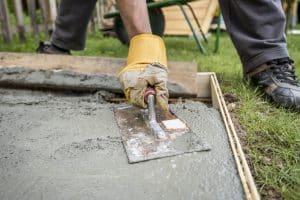
Think About Finishing: A brushed or textured finish provides good slip resistance, which is important for outdoor surfaces that get wet. A smooth trowelled finish looks sleek but can become slippery. For the best of both worlds, an exposed aggregate finish gives you an attractive look with built-in grip. If you want a perfectly smooth, level floor inside a garage or outbuilding, consider adding a floor screed layer on top of the main concrete base.
Frequently Asked Questions
What is the best concrete mix for a garden path? For standard garden paths with only foot traffic, C20 is the ideal choice. It provides good strength, easy workability, and excellent durability against British weather. For paths that will see heavier use, upgrading to C25 gives extra peace of mind.
Do I need PAV1 for my patio? If your patio is outdoors and exposed to frost, PAV1 is strongly recommended. Its air-entraining agent protects against freeze-thaw damage, which is the main cause of outdoor concrete deterioration in the UK. For a covered or sheltered patio, C20 or C25 may be sufficient.
What is the difference between PAV1 and C35? PAV1 is designed specifically for external paving and includes frost protection through air-entraining agents. C35 is a stronger, heavy-duty mix suited to commercial yards, agricultural buildings, and areas with very heavy vehicle traffic. For most domestic driveways and garden paving, PAV1 is the right choice. C35 is typically used where heavier loads are expected.
Can I use coloured or decorative concrete in my garden? Absolutely. Integral colour pigments can be mixed into the concrete for a consistent colour throughout. You can also use stamped patterns to mimic natural stone, brick, or wood. Exposed aggregate finishes show off decorative stones in the mix for a natural, textured look.
How do I get concrete to my back garden? If access is limited, our Mini Mix lorries, volumetric lorries, or concrete pumps can help. Our line pumps can deliver concrete up to 100 metres from the road through pipes that run along the ground, through houses, or up alleyways. Our boom pump can reach over walls and obstacles.
How much concrete do I need? Measure your area (length x width x depth in metres) to get the volume in cubic metres. For example, a 4m x 3m patio at 100mm deep needs 1.2 cubic metres. We recommend adding 10% extra for variations in ground level. Use our concrete calculator for a quick estimate, or call us and we will help you work it out.
Does concrete work for sustainable garden design? Yes. Permeable concrete options allow water to drain through rather than creating runoff, supporting natural drainage. Our volumetric lorries reduce waste by mixing only what you need, and because they replace multiple delivery trips, they lower carbon emissions too.
Why Choose Base Concrete for Your Garden Project?
We are a family-run business based in Hemel Hempstead, and we have been delivering quality ready-mixed concrete across North London, Hertfordshire, Buckinghamshire, and Bedfordshire since 2002. We pride ourselves on helpful, friendly staff and always aim to leave your site clean and tidy.
Whether you are a DIY homeowner tackling a weekend patio project or a professional landscaper working on a complete garden transformation, we have the right concrete mix and the right delivery method for your job. Check our areas we cover to confirm we deliver to your location.
Our team will help you choose the correct grade, calculate the right quantity, and arrange delivery that works for your site.
Ready to get started? Call us to discuss your garden landscaping project:
- Hemel Hempstead: 01442 389105
- St Albans: 01727 881979
- Watford: 01923 571221
- Luton: 01582 825545
- Aylesbury: 01296 906112