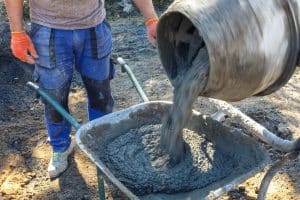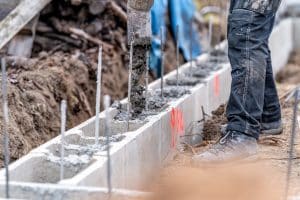
On some jobs, the pour is the easy part. The hard part is getting the concrete to the spot in the first place. Narrow lanes, a gap only just wide enough for a van, a back garden with no side gate, or a first floor with no easy route up. If you build on cramped or awkward sites, you have probably lost time waiting for a lorry that could not get close enough.
This guide is for builders facing that problem. It explains how a volumetric mixer copes with restricted access concrete work, when a smaller mini mixer is the better call, and how adding a concrete pump lets you reach places a lorry never could. Get the delivery right, and the rest of the job runs a lot smoother.
What a volumetric mixer is
A volumetric mixer is a lorry that carries the raw materials for concrete in separate tanks. The sand, gravel, cement and water stay apart until you need them. The machine then mixes the concrete fresh on your site, right at the point of the pour.
This is different from a standard drum mixer, which brings concrete that was already mixed back at the plant. With volumetric concrete, the mix is made moments before it goes down, so it is always fresh and at its best. You can also change the mix on the spot if the job needs it, and ask for more than one type of concrete from a single visit.
For tight access work, three things about a volumetric mixer really help:
The mixer carries up to 10 cubic metres in one lorry, so you rarely need repeat trips that block a narrow road again and again. You only pay for what you actually use, because the machine measures the concrete as it mixes. And because nothing is mixed until you are ready, there is no clock ticking on a full drum while you sort out access.
When a mini mixer is the better fit
A volumetric mixer is a full-size lorry. On some sites it simply will not fit, and that is where a smaller vehicle wins.
A mini mixer is about the same size as a 6-yard skip lorry. It is shorter than a normal concrete lorry, so it can turn into narrow driveways, squeeze down small residential streets and reach restricted building sites that larger vehicles cannot manage. A handy rule of thumb: if a skip lorry has been able to drop a skip at the property before, a mini mixer will usually fit just fine.
Mini mixers carry up to 4.5 cubic metres and can deliver amounts as small as 1 cubic metre. That makes them a strong choice for shed bases, garage floors, patios, footpaths, domestic foundations and extension bases. If your pour is on the smaller side and the access is the real challenge, a mini mixer is often the simplest answer.
So the choice usually comes down to two questions. How much concrete do you need, and how tight is the way in? Larger pours on a lane that a full lorry can just about reach suit a volumetric mixer. Smaller pours on a really tight approach suit a mini mixer.
Reaching the awkward spots with a pump
Sometimes the lorry can get near the site but not to the actual pour. The concrete still has to travel the last stretch, and that might mean a back garden, a side return, or an upper floor.
This is where concrete pumping works alongside the mixer. A line pump pushes concrete through steel and rubber pipes along the ground, around corners, through a house and even up scaffolding. Line pumps can reach well over 100 metres, so the lorry can park on the road while the concrete flows to where you need it. A boom pump goes one better for higher work, using a lifting arm that passes over walls, fences and other obstacles to place concrete on a first floor or across a tricky site.
Pairing a mixer with a pump saves a lot of barrow work by hand, which speeds the job up and cuts the effort for your team. It also keeps the site cleaner, because there is far less spillage than wheeling load after load across a garden. For larger builds, this same combination is often used on commercial concrete projects where access is limited, but the volumes are high.
Choosing the right option
The table below sums up when each option makes the most sense on a tight or awkward site.
| Option | Best for | Rough capacity | Access strength |
|---|---|---|---|
| Volumetric mixer | Larger or uncertain pours where you want fresh, mix-on-site concrete | Up to 10 cubic metres per lorry | Good on narrow lanes a full lorry can still reach; pay only for what you use |
| Mini mixer | Small to medium pours on very tight approaches | 1 to 4.5 cubic metres | Fits where a skip lorry fits, so ideal for narrow drives and small streets |
| Concrete pump | Reaching back gardens, side returns and upper floors | Around 1 cubic metre per minute | Moves concrete over 100 metres and up scaffolding, so the lorry can stay on the road |
Often the best plan uses more than one of these together. A volumetric mixer on the road, feeding a line pump that carries the concrete to a back garden, covers a huge range of difficult sites in one go.
A quick word on safety
Wet concrete and cement are tough on skin and eyes, so it pays to plan the pour with safety in mind, especially in a confined space where people work close to the flow. The UK Health and Safety Executive has clear guidance on managing the risks from cement-based materials, which you can read on the HSE cement page. Gloves, eye protection and a way to wash off splashes quickly should be part of every job.
Getting the delivery right
On a tight access site, the delivery method is not a detail. It decides how quickly and safely the concrete reaches the pour. A volumetric mixer gives you fresh concrete and flexible volumes for larger jobs, a mini mixer squeezes into the narrowest approaches for smaller pours, and a pump carries the mix the final stretch to the spots a lorry can never reach.
If you are not sure which setup suits your site, the simplest step is to describe the access and the amount you need, and let the supplier match the right lorry, or the right combination, to the job.