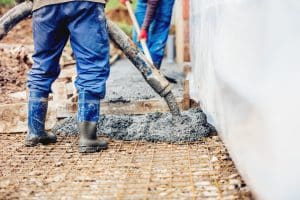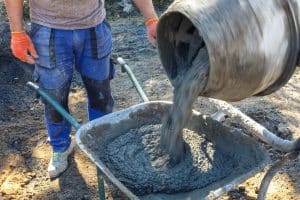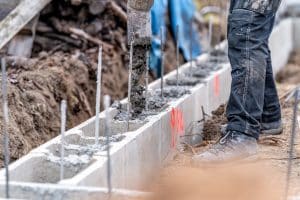
Foundations and footings are the part of a build you never see once the job is finished, but they carry the weight of everything above them. If the base is weak or poorly poured, problems can show up years later as cracks, movement or damp. That is why getting the concrete right matters so much. For many groundworkers and builders, onsite mixed concrete is the easiest way to keep a strong, steady supply flowing during a foundation or footing pour.
This guide explains what onsite mixed concrete is, why it suits foundation work, which grades to choose, and how mixing on demand helps you avoid waste and part-set loads.
What is onsite mixed concrete?
Onsite mixed concrete is made fresh at your site, right at the point where you need it. Instead of being batched at a plant and driven to you already mixed, the raw materials of cement, sand, aggregate and water are carried on the lorry and combined on the spot. This is often done with a volumetric concrete lorry, which acts like a mobile mixing plant on wheels.
Because the mix is made as you go, you only take what you need and only pay for what you use. A volumetric lorry can carry up to 10 cubic metres, so it holds plenty for a big continuous pour. This is different from standard ready mix concrete, which arrives already mixed in a drum and is best used within a set time before it starts to set.
Why it suits foundations and footings
Foundation and footing pours often need to be done in one go so the concrete bonds as a single solid mass. A break in the pour can create a weak line called a cold joint. On-site mixing helps you avoid this in a few clear ways.
The first is a steady supply. With mixing on demand, the lorry keeps producing fresh concrete for as long as the pour needs, so you are not left waiting for the next load to turn up. The second is timing. Freshly mixed concrete has not started to set, so you are never trying to place a load that has stiffened on the journey. The third is control. If your dig turns out to be deeper or wider than planned, which happens a lot in groundworks, you can simply mix more rather than ordering another full load.
Choosing the right grade
Not all concrete is the same. Foundations and footings need a mix that is strong enough for the load and suited to the ground you are building on. The table below gives a simple overview of common choices for foundation work.
| Grade | What it offers | Good for |
|---|---|---|
| GEN1 (C10) | A basic, lower strength mix | Trench fill and simple foundations in normal, non-aggressive ground |
| C25 concrete (ST2) | A medium strength, general purpose mix | Footings and foundations that carry more weight, such as house extensions |
| FND2 concrete | A sulphate-resisting mix | Foundations in ground with sulphates or heavy clay |
The important point with foundations is the ground itself. In some soils there are natural chemicals called sulphates. Over time, these can attack ordinary concrete and slowly break it down. Where a soil survey or building control officer flags this, you need a sulphate-resisting mix such as FND2, which uses a special cement that stands up to the chemical attack. You can read more about building in these conditions in the guidance on concrete in aggressive ground from the Designing Buildings Wiki.
If you are unsure which grade to order, it is always worth talking it through before the pour. The wrong choice is hard and costly to put right once the concrete is in the ground.
How mixing on demand cuts waste
One of the biggest headaches with pre-mixed loads is guessing the amount. Order too little and the pour stops halfway. Order too much and you pay for concrete that ends up as spoil.
With on-site mixing, the mix is made in the volume you actually use, so you are far less likely to be left with a part-set load hardening in the drum. If the job finishes and there is a little material left, it has not been sitting mixed for hours, so there is less mess and less to clear away. For groundworkers running several footings in a day, this control over supply and waste can make a real difference to both cost and progress.
Getting a strong, reliable base
A good foundation comes down to three things: the right grade for the ground, a continuous pour with no cold joints, and concrete that is fresh when it goes in. On-site mixed concrete helps with all three by giving you a steady, made-to-order supply that you control on the day.
If you have a foundation or footing pour coming up, it helps to have your measurements and, where needed, your soil information ready. The team can then work out the right grade and the right amount, so your base is strong, reliable and built to last.