
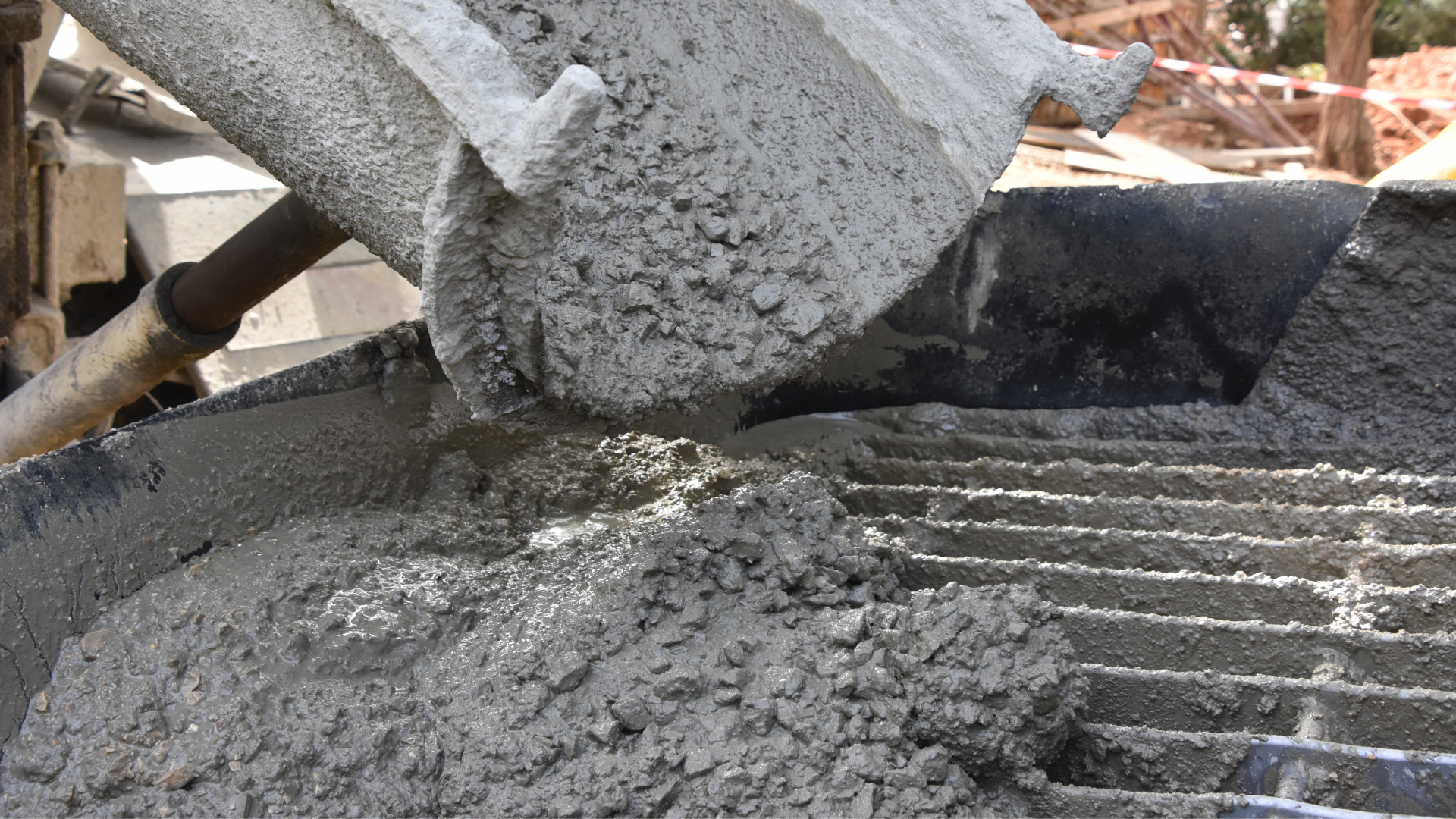
Summer presents the ideal window for foundation work. Longer days extend productive working hours, drier conditions make excavation straightforward, and the absence of frost eliminates one of concrete’s greatest enemies. Yet warm weather brings its own considerations, particularly when working with the higher-strength mixes that structural foundations demand.
C35 and C40 concrete form the backbone of serious foundation work, providing the compressive strength that Building Control requires and engineers specify. Understanding how these mixes behave in summer conditions, and how to work with them successfully, ensures your extension, garage or garden room starts on the strongest possible footing.
At Base Concrete, we supply ready mix concrete across Uxbridge and the surrounding areas, supporting builders and homeowners through the busiest foundation season of the year. This guide explains what you need to know about high-strength concrete for summer builds.
Understanding C35 and C40 Concrete
The numbers in concrete grades indicate compressive strength measured in newtons per square millimetre. C35 concrete withstands 35 N/mm² of compressive force once fully cured, whilst C40 handles 40 N/mm². These represent significant steps up from the C25 grade commonly used in lighter domestic applications.
Why does this strength matter for foundations? The concrete beneath your structure carries every load above it, transferring weight safely into the ground below. Foundations for substantial buildings, those on challenging ground conditions, or structures requiring deeper or reinforced bases all benefit from the additional capacity these higher grades provide.
When C35 Concrete Is Specified
C35 sits at the threshold between standard domestic work and more demanding applications. You’ll encounter C35 specifications for larger house extensions where loading calculations require additional strength, foundations on ground with moderate bearing capacity concerns, reinforced concrete bases where steel and concrete work together structurally, and commercial or industrial buildings with significant load requirements.
Many engineers default to C35 for foundation work simply because the modest cost increase over C25 buys meaningful additional performance. When a foundation will support a structure for decades, the price difference between grades becomes negligible against the project’s total cost.
When C40 Concrete Is Necessary
C40 represents the upper end of commonly specified foundation grades. Projects requiring this strength typically involve challenging ground conditions where soil bearing capacity is poor, deep foundations or piled systems where concrete must perform under significant pressure, structures with heavy point loads such as steel frames bearing on pad foundations, basements and retaining walls resisting substantial lateral earth pressure, and any situation where structural engineers have calculated loads demanding this performance level.
If your project specifies C40, the decision reflects genuine engineering requirements rather than arbitrary caution. These foundations are doing serious work, and the concrete must match.
Foundation Types for Summer Projects
Strip Foundations
The traditional choice for load-bearing walls, strip foundations run continuously beneath the structure’s perimeter and internal supporting walls. Depth varies based on ground conditions and Building Control requirements, but 450mm wide trenches filled to at least 150mm below ground level represent a typical starting point.
Strip foundations for extensions and garages commonly specify C35 concrete for foundations, with C25 acceptable for lighter structures on good ground. The continuous nature of strip foundations makes them relatively straightforward to pour in summer, though longer runs benefit from pumped delivery to maintain consistent placement speed.
Trench Fill Foundations
A variation on strip foundations, trench fill uses concrete to fill the entire excavation depth rather than just the bottom portion. This approach saves the labour of building masonry below ground and speeds construction considerably. The trade-off is increased concrete volume, making accurate quantity calculations essential.
Trench fill foundations work particularly well for summer construction. The single pour eliminates the cold joints that can occur when building masonry in stages, and the speed advantage helps beat the faster setting times warm weather brings.
Pad Foundations
Where point loads concentrate, such as beneath steel columns or at corners of timber-framed garden rooms, pad foundations provide localised support. These isolated concrete blocks transfer specific loads directly to the ground, sized according to both the load above and the soil’s bearing capacity below.
Pad foundations frequently specify C40 concrete, particularly when supporting steel frames. The concentrated nature of the loading demands the additional strength, and the relatively small volumes involved make the cost difference negligible.
Raft Foundations
For ground with particularly poor bearing capacity, or where traditional strip foundations would require excessive depth, raft foundations spread the entire structure’s load across a single reinforced slab. Common in areas with clay soils prone to movement or made ground with variable composition, rafts provide stability where other foundation types struggle.
Raft foundations are substantial undertakings, with significant concrete volumes and complex reinforcement requirements. The pour itself demands careful planning, adequate labour, and typically pumped delivery to achieve placement rates matching the available working time.
Temperature Considerations for Summer Pours
Concrete chemistry responds to temperature. The cement hydration reaction that transforms wet mix into solid stone accelerates in warmth and slows in cold. This fundamental behaviour shapes everything about summer concrete work.
Faster Setting Times
In hot weather, concrete sets faster. The working window between delivery and initial set shortens, sometimes dramatically on particularly warm days. What might give you two hours in spring could tighten to ninety minutes or less when temperatures climb.
This acceleration affects multiple aspects of the pour. Concrete must be placed, compacted and finished before it begins stiffening. Any delays, whether from access difficulties, insufficient labour, or equipment problems, eat into an already compressed timeline. Planning accordingly means ensuring everything is ready before the truck arrives, with no last-minute scrambling that consumes precious working time.
Increased Water Demand
Warm concrete loses moisture faster through evaporation. The temptation to add water at the point of delivery, softening an apparently stiff mix, must be firmly resisted. Additional water beyond the designed mix ratio weakens the finished concrete, potentially compromising the strength your foundations require.
If concrete arrives appearing stiffer than expected, contact us immediately. We can advise whether the consistency falls within acceptable parameters or if there’s a genuine issue to address. What looks problematic to an inexperienced eye often proves perfectly normal for the specified mix and conditions.
Surface Drying and Plastic Shrinkage
Exposed concrete surfaces lose moisture rapidly in warm, dry or windy conditions. When evaporation outpaces the rate at which bleed water rises to the surface, plastic shrinkage cracking can result. These cracks form before the concrete has developed any significant strength, creating weaknesses in what should be a monolithic structure.
Foundation work offers some natural protection, since most of the concrete sits within formwork or trenches rather than exposed to air movement. Still, any surfaces that will remain visible, such as the tops of pad foundations or raft slabs, benefit from prompt curing measures once finishing completes.
How Base Concrete Ensures Quality in Hot Weather
Supplying ready mix concrete in Uxbridge through summer means managing the challenges warm weather presents. Our approach addresses these issues at every stage from batching through delivery.
Mix Design Adjustments
Summer mixes can incorporate admixtures that extend working time without compromising final strength. Retarders slow the hydration reaction, giving additional minutes for placement and finishing. We adjust formulations based on forecast conditions, ensuring the concrete you receive performs appropriately for the day’s weather.
These modifications happen at the batching stage, built into the mix design rather than added ad hoc at delivery. The result is consistent, predictable concrete behaviour that your team can rely upon.
Temperature Monitoring
We monitor concrete temperature as part of our quality control process. Specifications typically require delivery temperatures below certain thresholds, often 30°C for standard work. Exceeding these limits risks compromised performance, so we track conditions carefully and adjust production accordingly.
On particularly hot days, this might mean scheduling deliveries for early morning when both air and material temperatures are lower. Discussing timing flexibility when you order allows us to suggest optimal delivery windows for the conditions forecast.
Consistent Supply
Volumetric mixing produces concrete fresh at your site, eliminating the concerns around transit time that affect traditional drum mixers. The concrete entering your foundations was mixed moments earlier, not batched at a distant plant and trucked through traffic whilst the clock ticks on its working life.
This freshness proves particularly valuable in summer. Every minute saved in transit translates directly to additional working time at your end. For hot weather pours, that difference can prove decisive.
Practical Tips for Summer Foundation Work
Prepare Thoroughly Before Delivery
Complete all excavation, formwork and reinforcement well ahead of the concrete arriving. Check levels, secure any loose elements, and walk through the pour sequence with your team. Once the truck appears, full attention should focus on placement rather than last-minute preparation.
Have Adequate Labour Available
Summer pours demand pace. Ensure sufficient people are present to maintain continuous placement, with someone dedicated to compacting, another to initial levelling, and others managing the delivery hose or chute. Trying to manage with minimal crew invites problems when time runs short.
Protect and Cure Properly
As soon as finishing completes, protect exposed surfaces from moisture loss. Curing membranes, damp hessian, or polythene sheeting all help retain the water concrete needs for proper hydration. Begin curing promptly and maintain protection for at least the first few days whilst the concrete develops strength.
Communicate with Your Supplier
If conditions on site differ from expectations, temperatures soar beyond forecasts, or any issue arises during the pour, contact us immediately. Problems addressed early are problems solved; those ignored tend to compound.
Serving Uxbridge and Surrounding Areas
Base Concrete supplies C35, C40 and the full range of concrete grades throughout Uxbridge and neighbouring areas. Whether your foundation project sits in Hillingdon, Ruislip, Hayes, West Drayton or the surrounding communities, we deliver the ready mix concrete your summer build demands.
Our team understands the particular requirements of foundation work and the additional considerations warm weather brings. From initial quantity calculations through delivery scheduling and mix specification, we support your project at every stage.
Start Your Summer Foundation Project
The season for foundation work is here. Contact Base Concrete to discuss your extension, garage or garden room project, get accurate pricing for C35 or C40 concrete, and book your delivery. We’ll ensure your foundations receive exactly the concrete they need, mixed and delivered to perform faultlessly whatever the summer weather brings.